Marketing Strategy
Beauty | Market Expansion | Cultural Partnership
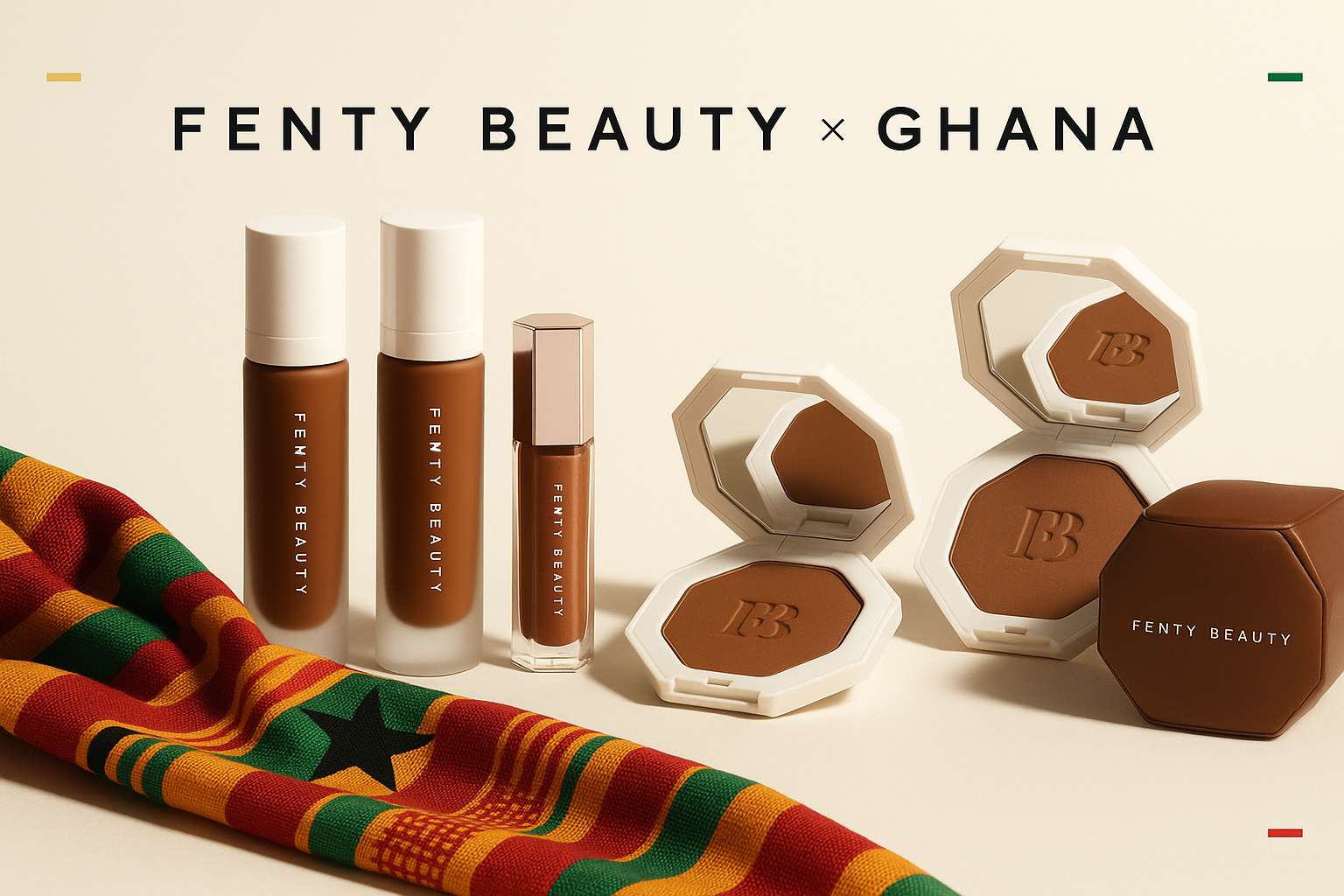
FENTY BEAUTY X GHANA
Introduction
Challenge
Fenty Beauty launched in Ghana in 2022 but struggled to move beyond transactional presence. Products were available only to wealthy consumers, the brand didn't invest in local talent, and "Beauty for All" remained aspirational rather than accessible. How does a premium beauty brand authentically grow in a market that sets global trends but can't afford to participate in them?
Objective
Develop a sustainable market expansion strategy for Fenty Beauty in Ghana that generates revenue growth through strategic community investment and market access innovation.
Marketing Insight
Ghana's beauty market is culturally influential but economically constrained. While 95% of Ghanaians are priced out of luxury beauty ($20-40 products), Ghanaian beauty trends, techniques, and aesthetics consistently go viral globally. The opportunity lies in partnering with the trendsetters directly, creating a model where cultural influence drives market access. This approach transforms Ghana from a limited retail market into a strategic growth opportunity with built-in brand advocacy.
Strategy: Fenty Roots Ghana
A phased market expansion strategy built on four pillars:
1. Local Talent Integration → Elevate Ghanaian makeup artists as campaign faces and product collaborators, building authentic market credibility while leveraging Rihanna's global brand equity
2. Infrastructure Investment → Build permanent Fenty Beauty Hub in Accra (training center, retail space, creator studio, event venue), serving as the physical foundation that makes all other pillars possible
3. Creator Revenue Model → Revenue-sharing partnerships with local creators and paid ambassador program that drives word-of-mouth marketing and sustainable brand advocacy
4. Tiered Access → Multiple entry points from premium ($40) to accessible ($15) tiers, plus free professional training program that creates qualified brand ambassadors and expands Fenty's talent pipeline

Four-tier access strategy expanding market reach while maintaining brand equity
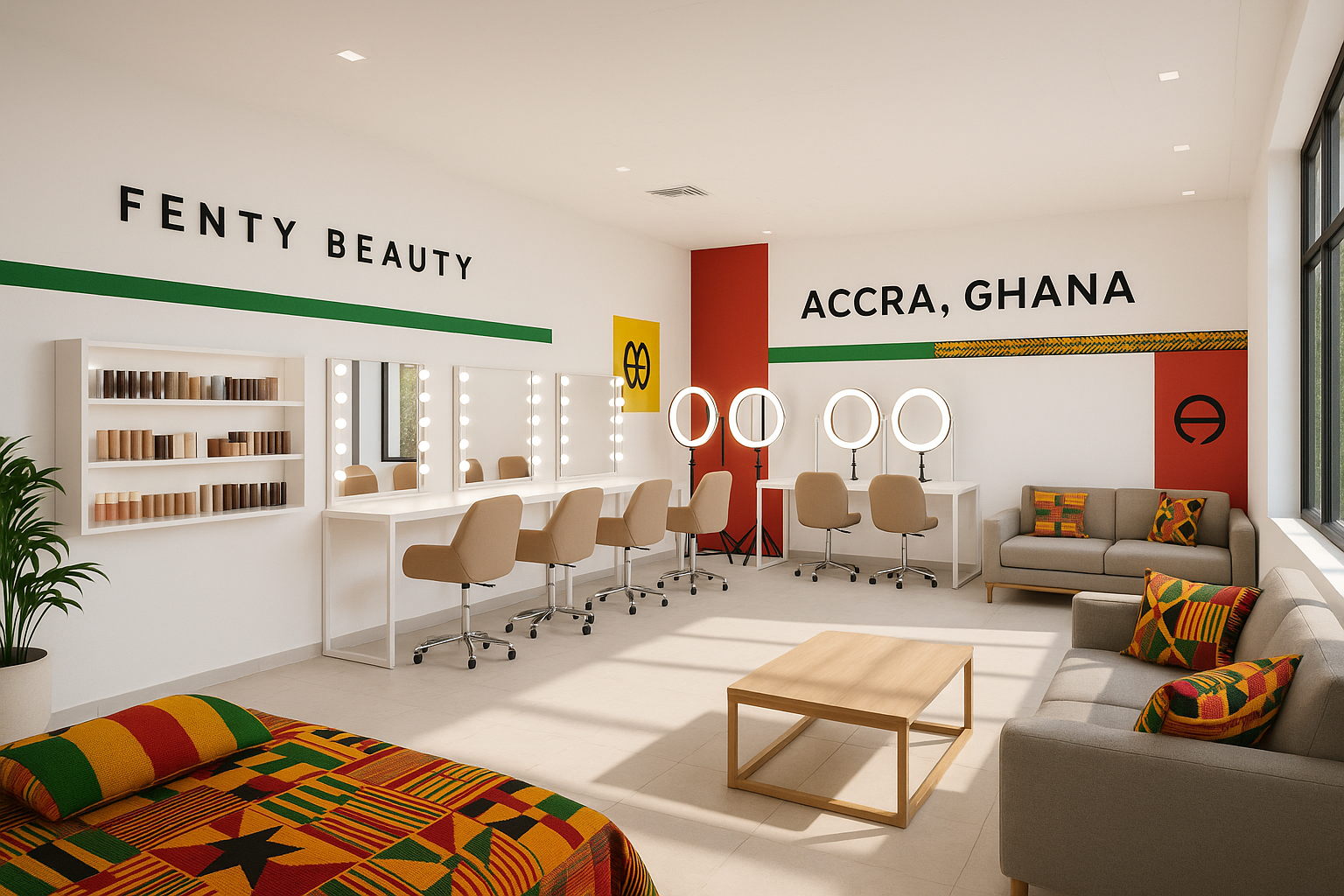
Fenty Beauty Hub concept - permanent training center and community space in Accra
Campaign
“Built With Ghana, Not For Ghana"
Marketing centered on Ghanaian beauty talent. Local makeup artists, influencers, and entrepreneurs become the heroes of the campaign, with Rihanna appearing as collaborator celebrating their work, not as sole star.
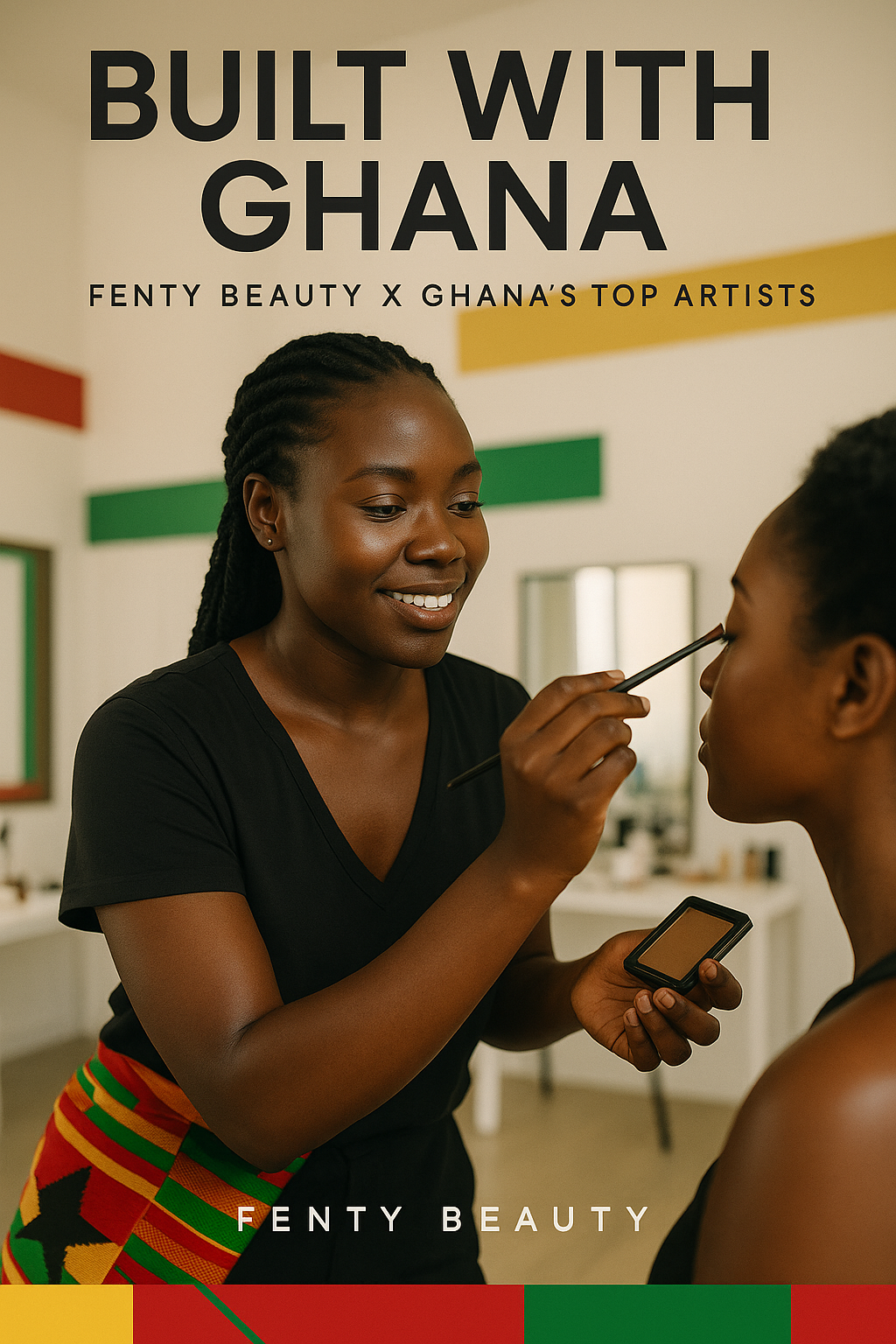
Campaign positioning Ghanaian beauty professionals as co-creators and partners
Projected Impact
Market Penetration Goals:
Target 5-10% of Ghana's premium beauty segment within Year 1
Expand accessible tier to reach 15-20% of aspirational beauty consumers by Year 2
Build foundational customer base of brand advocates who align with partnership model
Revenue Framework:
Tiered pricing strategy ($15-$40) balancing accessibility with premium brand positioning
Multiple revenue streams: retail sales, training program fees, creator partnership commissions
Sustainable pricing model that allows for 10% community reinvestment while maintaining profitability
Economic Development Commitments:
10% of gross revenue reinvested into community training programs and local partnerships (customer acquisition and loyalty investment with projected 3-year payback through brand advocacy)
50+ direct employment opportunities through Fenty Beauty Hub operations
Revenue-sharing model with local creators and ambassadors (industry-standard 15-20% commission structure)
Cultural & Brand Impact:
Position Fenty as first global beauty brand to build permanent infrastructure in African markets
Generate authentic creator partnerships vs. transactional influencer relationships
Set new industry precedent for partnership-based expansion model
Success Measurement:
Market share growth across income tiers (tracking premium vs. accessible product mix)
Local talent employment rate and sustained creator partnerships
Brand sentiment shift from "aspirational" to "accessible" in consumer research
Customer lifetime value and repeat purchase rates vs. one-time transactions
Outcome
This strategy demonstrates how premium brands can maintain positioning while expanding accessibility through smart tiering and local investment. By treating expansion as strategic partnership, Fenty builds sustainable growth through deep market penetration and cultural loyalty, making 'Beauty for All' a profitable growth driver, not just brand positioning.